
Registration REQUIRED by 4pm on April 29, 2026 to attend this event in-person.
Please join the Ukrainian Studies Program and the Harriman Institute for a lecture by Andrey Shlyakhter. Moderated by Mark Andryczyk.
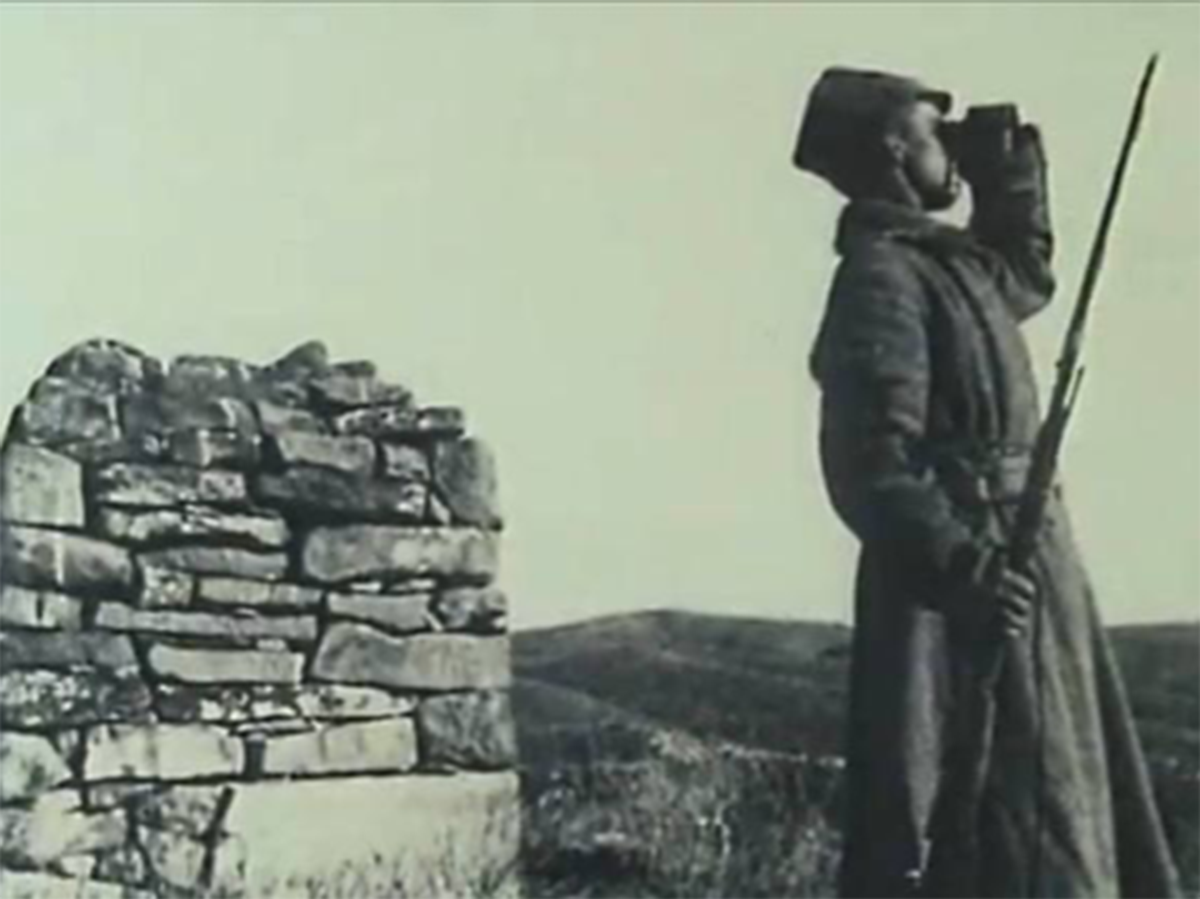
By the eve of the Second World War, the Soviet Union had turned the world’s longest border into the world’s most tightly controlled. Why and how did this happen? While scholars have documented the range of forces that shaped Soviet border control, an anachronistic assumption projected backward from the Cold War persists in both academic and popular understanding: that the Soviet border control system was built to prevent an ideologically embarrassing exodus of Soviet inhabitants. Drawing on formerly secret Soviet archival documents, the talk traces the institutional genesis, numerical growth, and geographic distribution of the Soviet border guard along the country’s perimeter from Finland to the Far East. It argues that the apparatus that held the Soviet population captive, and would foster similar systems across the Soviet bloc, was created and cultivated primarily for other purposes. Perceived security imperatives – fears of espionage, sabotage, guerrilla incursions, borderland uprisings, and foreign invasion – combined with concerns about the loss of nonhuman economic resources ranging from furs to gold to livestock, to determine when, where, and by how much the frontier force was bolstered. The border guard grew nearly fourfold through a series of crisis-driven reinforcements that followed a ratchet pattern: each increase remained in place even after the perceived threat had receded. Highlighting how coercive capacities cultivated for one purpose were readily redirected to another, the talk shows how state and nonstate actors on both sides of the Soviet border inadvertently helped render it increasingly impermeable in both directions. Soviet leaders certainly appreciated that a reinforced border also impeded their subjects’ freedom to leave, but if this recognition greased the ratchet, it was other concerns that usually turned it. At the same time, the multipurpose utility of coercive capacity meant that the Kremlin’s incentives aligned in escalatory ways: what might have restrained democratically accountable leaders only encouraged Soviet securitization.
 Andrey Shlyakhter (Lecturer in History) is an international historian of the Soviet Union and its neighbors whose work examines how economics, security, and ideology interact at state frontiers. He received his Ph.D. in December 2020 from the Department of History of the University of Chicago. His comparative dissertation, “Smuggler States: Poland, Latvia, Estonia, and Contraband Trade Across the Soviet Frontier, 1919-1924,” won the 2021 Ab Imperio Annual Award for Best Dissertation Chapter and was a finalist for the 2022 Herman E. Krooss Prize for Best Dissertation in Business History. His book project, “Smuggled Goods, Soviet Borders: Contraband Trade and the Making of the Soviet System, 1917-1930,” grows out of this research. Dr. Shlyakhter was the 2024-25 Petro Jacyk Post-Doctoral Fellow in Ukrainian Politics, Culture, and Society at the University of Toronto, and has been appointed the 2026-27 Temerty Post-Doctoral Fellow in Holodomor Studies at the University of Alberta.
