
Registration REQUIRED by 4pm on March 5, 2026 in order to attend this event.
Please join the Harriman Institute and the Department of Slavic Languages for a lecture by Peter Budrin, the latest installment of the William E. Harkins Colloquium. Moderated by Konstantin Mitroshenkov.
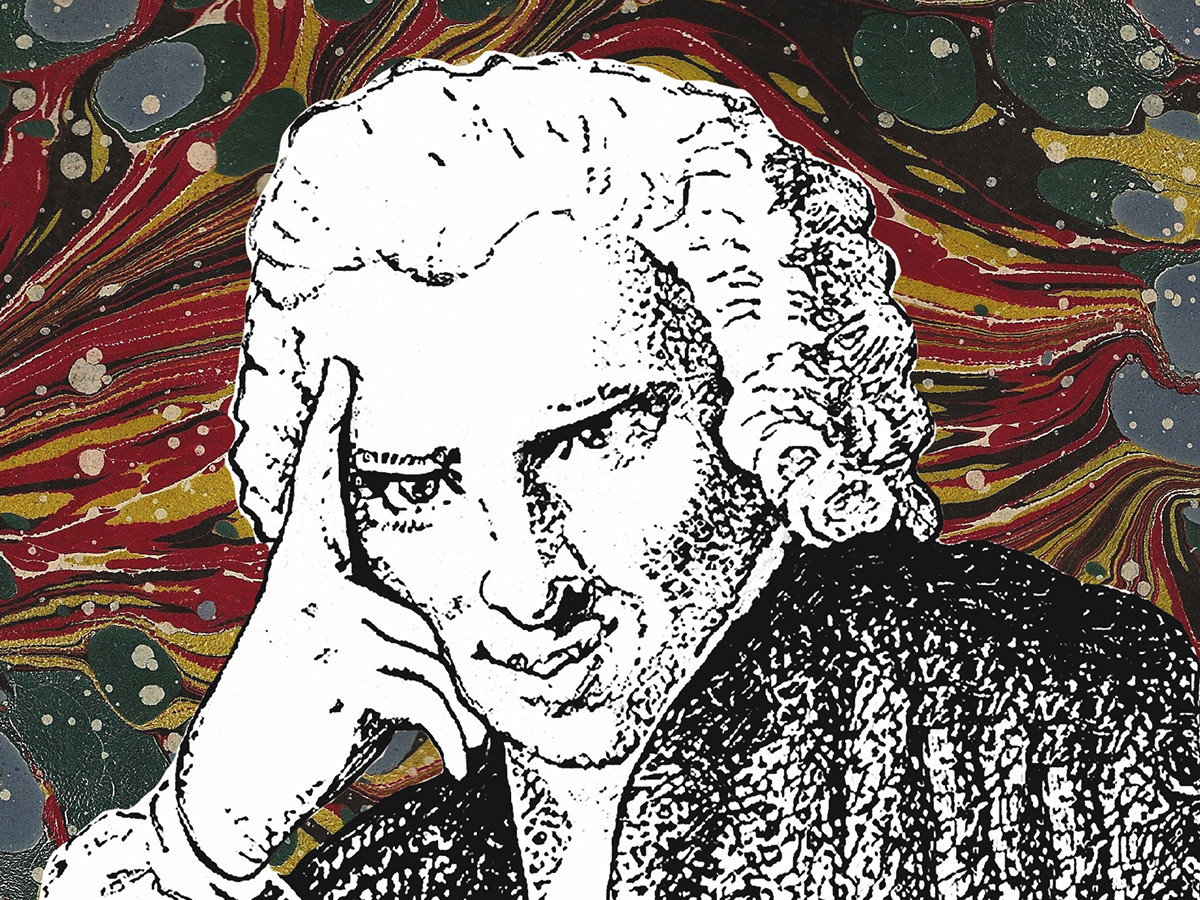
At first glance, Laurence Sterne’s writings might seem an unlikely object of sustained interest in early Soviet Russia. An eighteenth-century Anglican clergyman who preferred ambivalence and paradox to rationalizing schemes and solutions, Sterne was ironic about the radical materialism of some of his contemporaries. Nevertheless, his writings found a surprisingly wide audience in Soviet Russia during the first two decades after the October Revolution. In the 1920s, Viktor Shklovsky praised Sterne as an “extreme revolutionary of form,” turning the neologism sternianstvo into a critical shorthand for self-conscious narration and play with narrative time. Counterintuitively, with the anti-modernist turn of the Stalinist 1930s, wider readerly interest in Sterne did not decline but intensified, as he was increasingly read as the author of philosophical and psychological prose. The lecture situates early Soviet encounters with Sterne’s “Tristram Shandy” and “A Sentimental Journey” within the institutional frameworks of early Soviet publishing and literary criticism and traces networks of readers ranging from secondary-school pupils to learned philosophers and translators. Drawing on previously unpublished materials—illustrations, translations, private letters, and marginalia—it treats Sterne as a microhistorical case for the wider history of intellectual autonomy in the early Soviet period.
Peter Budrin is a Leverhulme Early Career Fellow at Queen Mary University of London. He received his doctorate from the University of Oxford (2021) and was a Postdoctoral Fellow at the Davis Center for Russian and Eurasian Studies at Harvard University (2021–2022). His book “Laurence Sterne and his Readers in Early Soviet Russia: The Secret Order of Shandeans” is coming out with Oxford University Press in March 2026.
About the William E. Harkins Colloquium
William Harkins was an expert in many areas and a versatile and innovative Slavist. In honor of his multifaceted contribution, the Department of Slavic Languages has established a colloquium that celebrates the cultural as well as disciplinary variety within the Slavic field. The Harkins Colloquium, run by graduate students, provides a forum beyond the classroom in which they pursue their intellectual interests. The aim is to reimagine Slavic studies both by drawing our own faculty and students together and by enhancing links to individuals and groups beyond the department.
Please email disability@columbia.edu to request disability accommodations. Advance notice is necessary to arrange for some accessibility needs.
