
Registration REQUIRED by 12pm on February 6, 2026 in order to attend this event.
Please join the East Central European Center at the Harriman Institute for a lecture by Kristóf Nagy. Moderated by Gail Archer.
Why are artists increasingly aligning with far-right movements in Eastern Europe and beyond? This talk examines the social foundations of the emerging coalition between far-right regimes and cultural producers, challenging conventional narratives about progressive art and repressive politics. Drawing on ethnographic fieldwork with the Hungarian Academy of Arts—a cultural flagship institution of Viktor Orbán’s Hungary—this presentation offers a political-economic analysis of contemporary culture wars. The talk reveals how the long downturn of US global hegemony, combined with the neoliberal restructuring of cultural markets, has created conditions for artists to become willing participants in national-protectionist and imperial projects. Besides mapping the emergence of this unexpected coalition, the talk also explores how these alliances succeed through institutional mechanisms—from patronage systems to the social penetration of local cultural production—and why previous liberal resistance movements have failed. Ultimately, this talk aims to offer takeaways beyond the case of Hungary by providing a novel understanding of culture wars as the rapid transformation of the art-patronage relation amid new economic arrangements and imperial ambitions.
 Kristóf Nagy is a historical anthropologist and sociologist specializing in the cultural politics of contemporary far-right governments. With a background in art history from the Courtauld Institute of Art and a Ph.D. in social sciences from Central European University, his research explores the intersections of imperialism, cultural infrastructures and far-right culture wars through ethnographic and historical methods. As a Fung Global Fellow at Princeton University in 2025/2026, he is developing his first monograph on far-right cultural policies and their global historical connections, centering the case of Hungary as a laboratory for contemporary culture wars.
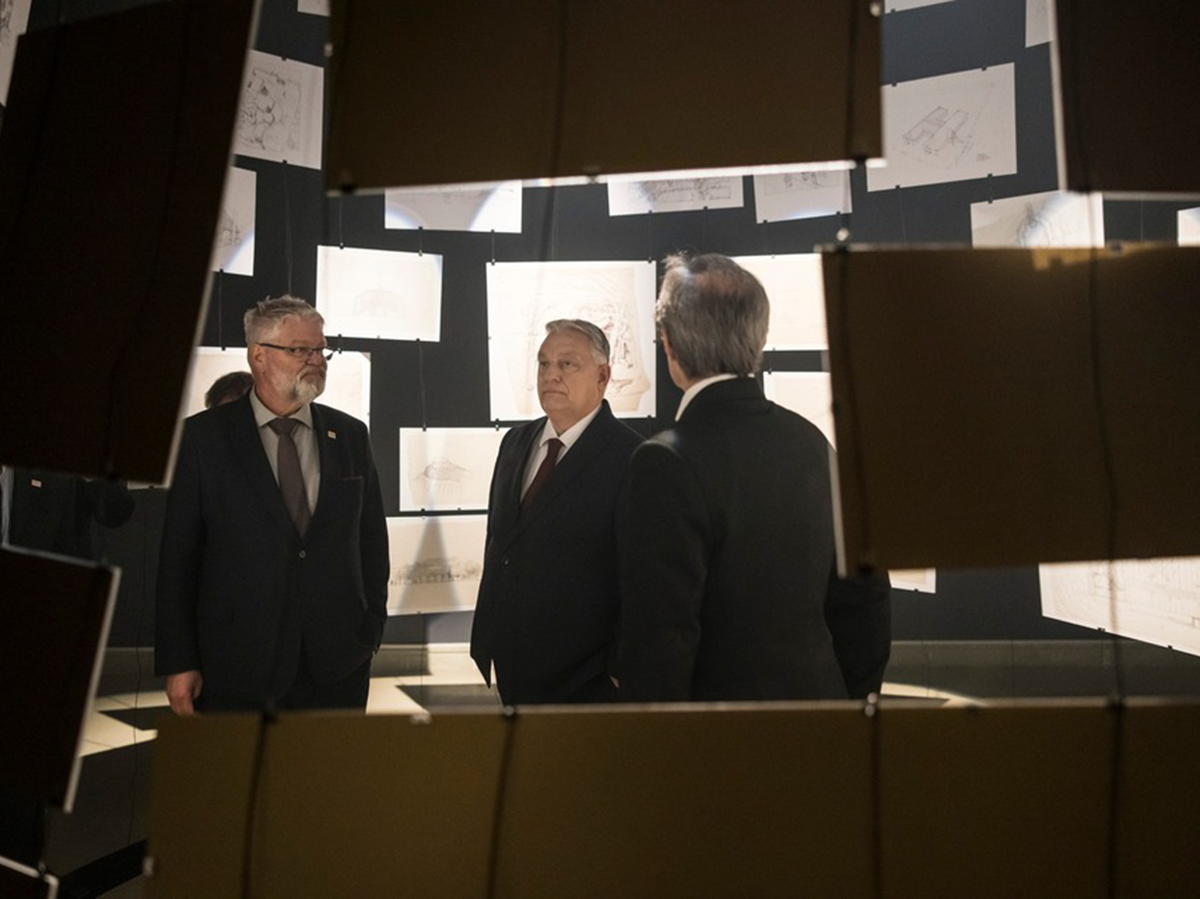
Image: Viktor Orbán in the circle of the members of the Hungarian Academy of Arts.
Please email disability@columbia.edu to request disability accommodations. Advance notice is necessary to arrange for some accessibility needs.
