
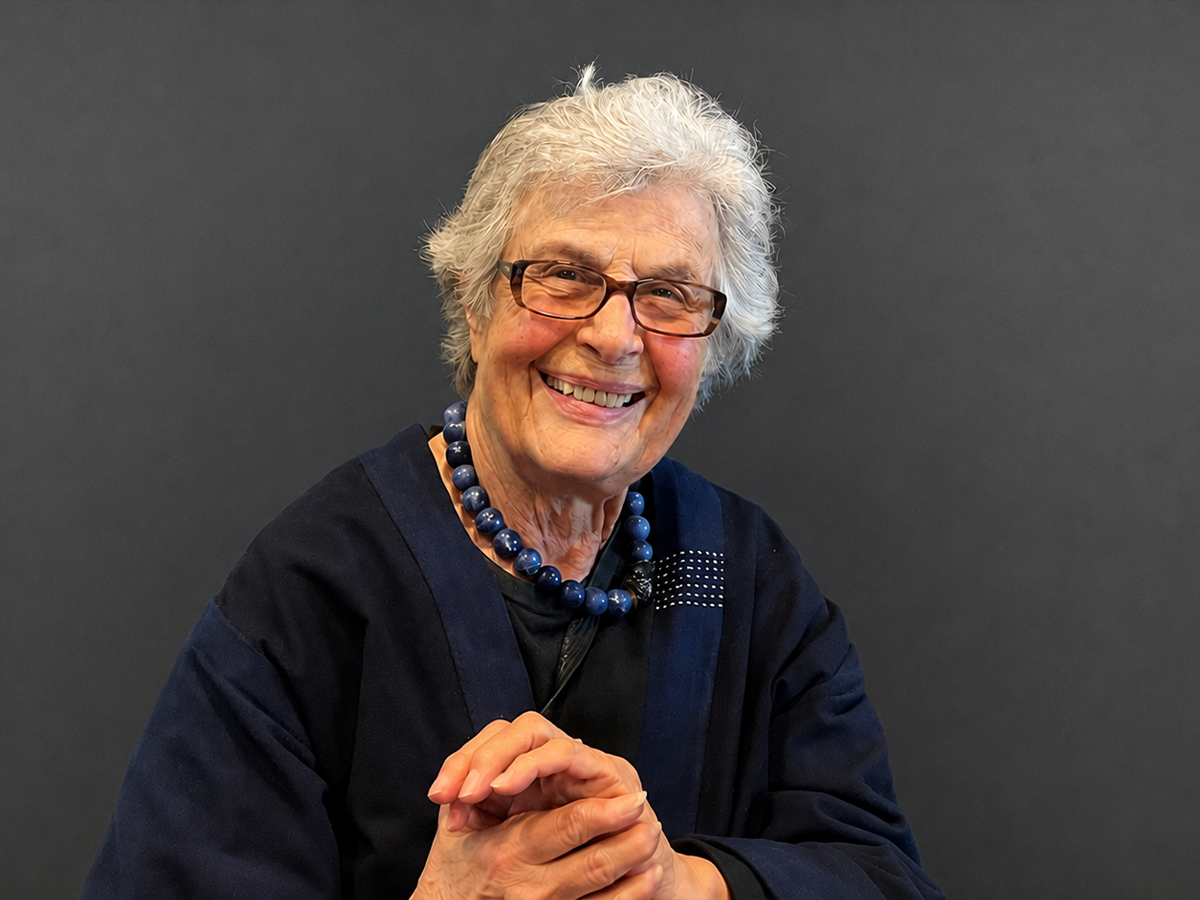
We share with great sadness the passing of our dear friend, colleague and alumna Colette Shulman (née Schwarzenbach), who died peacefully in hospice care on June 20, 2026 surrounded by friends and family.
A graduate of Columbia University’s Russian Institute, Shulman was a trailblazing journalist reporting on the Soviet Union during the Cold War era. She also distinguished herself as an editor, lecturer, and a relentless advocate for women’s initiatives, human rights, civil society and U.S.-Russia understanding.
Shulman was born in New York City in 1932 to “a very Swiss, bourgeois, middle class family of farmers and teachers and winemakers and cabinetmakers,” as she described in a 2017 interview for the Harriman Institute’s Oral History Project. She became interested in Russia after taking a course on nineteenth century Russian intellectual history while pursuing her undergraduate degree at Wellesley College.
In 1953, she began her graduate studies at the Russian Institute (now the Harriman Institute), one of the few women enrolled at the time. In the class ahead of her, four pioneering students visited the Soviet Union after the death of Joseph Stalin. Their experience made a great impression on Shulman and the other students, who entered the Institute during a period of great historical transition — the relative liberalization taking place under the new Soviet leader Nikita Khrushchev, and the waning of McCarthyism in the United States. Both historical events opened pathways for greater engagement with Soviet society, and expanded opportunities for academic, cultural and personal exchanges between the two countries.
Shulman took advantage of the opening. As she was finishing her coursework at the Russian Institute in 1955, the American Embassy to the USSR recruited Shulman to teach at and direct the Anglo-American school in Moscow. Shulman lived at Spaso House, the U.S. ambassador’s residence, where she again found herself surrounded by men. Yet, as she recalled for the Oral History Project, she felt comfortable in that environment. She attributes this comfort to her time at Wellesley, which she felt had trained women to be confident and independent. “It made [us] feel that [we] could do things in life, [we] could go on and explore,” she said. In her memoir, “When Russia Was Opening Up,” Shulman wrote about the meetings she had at Spaso House, including one with Khrushchev soon after his denunciation of Stalin.
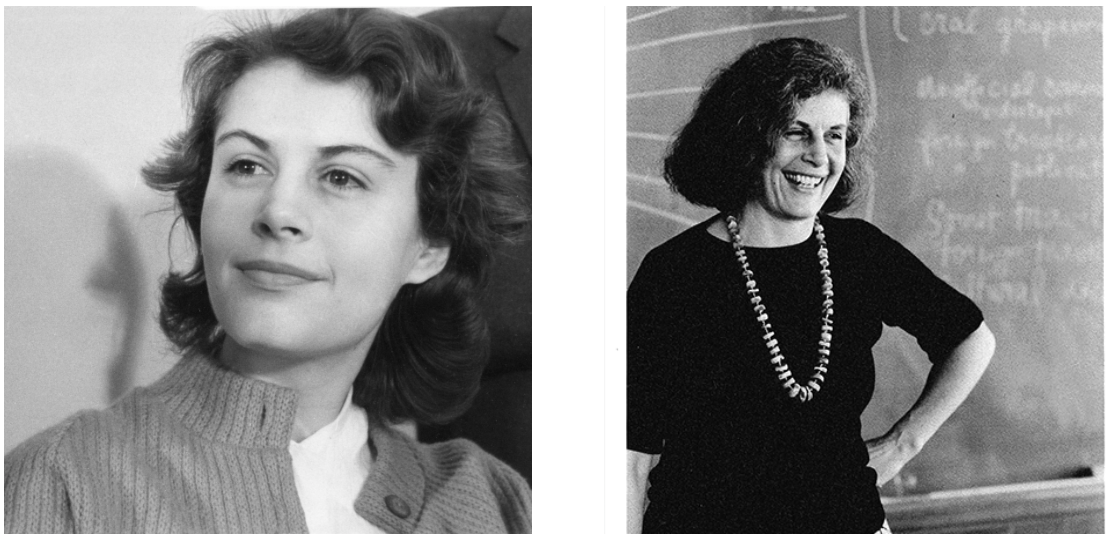
(left) Shulman in the Soviet Union in 1956 or 1957. Photo courtesy of Shulman; (right); Shulman at the Harriman Institute in 1986
Following a successful year running the Anglo-American embassy school, Shulman joined the United Press International (UPI) Moscow bureau at the invitation of the legendary correspondent Henry Shapiro. She was an elegant writer with a muscular mind and an insatiable curiosity about Soviet life. “During those first weeks in autumn 1956 of absorbing news agency routine, I had some free time and [was] determined to carve out my own sphere of reporting,” Shulman wrote in a reminiscence for Harriman Magazine’s 2021 75th anniversary issue. Armed with the confidence provided by the intensive two-year Russian-language and area studies training at the Russian Institute, Shulman recalled walking around Moscow asking questions. “I walked into shops and schools and buildings where it looked like something interesting might be going on,” she wrote. As an American journalist, she was determined to inform “readers abroad what everyday life was like in Moscow.”
Shulman reported for the UPI Moscow bureau until 1959 under the pen name Colette Blackmoore (her maiden name, Schwarzenbach, was too long to fit in the average newspaper column). During that period, she covered the aftermath of Khrushchev’s “secret speech,” the release of political prisoners from the Gulag, Moscow’s reaction to the Hungarian Revolution, and growing debates within Soviet society, including about women’s attitudes toward men. Among her most memorable experiences from that period were three months spent in Poland in 1957, covering Polish Communism in the wake of Władysław Gomułka’s return to power in the previous year. Unforgettable, too, was her interview with the Soviet poet, novelist and translator Boris Pasternak in Peredelkino on the morning after he won the Nobel Prize in literature for Doctor Zhivago in 1958. Throughout her stay in Moscow, Shulman was followed and, at times, harassed by the secret police — a rite of passage for any American working in the Soviet bloc at the time. “Everything was in place to watch us, follow us … there were plenty of them and only a few of us,” she recalled.
In 1959, Shulman moved back to the United States to become UPI’s United Nations correspondent. When she announced that she planned to leave the Moscow bureau, Roger Tatarian, vice president of UPI, wrote to bureau chief Henry Shapiro, “We will never find another Colette.” In 1960, she launched a weekly segment on PBS titled “Soviet Press This Week,” which explained Soviet politics, society, literature and foreign policy to viewers across the United States. She became a leading public commentator focused on the Soviet Union. That same year she married a fellow graduate of the Russian Institute, Marshall Shulman – a distinguished scholar, diplomat and founding director of the Harriman Institute. Together, they were at the center of the intellectual and diplomatic community that shaped Soviet and Russian studies in the United States. Their nearly 50-year long partnership was grounded in their mutual dedication to fostering international understanding and advancing U.S.-Soviet dialogue.
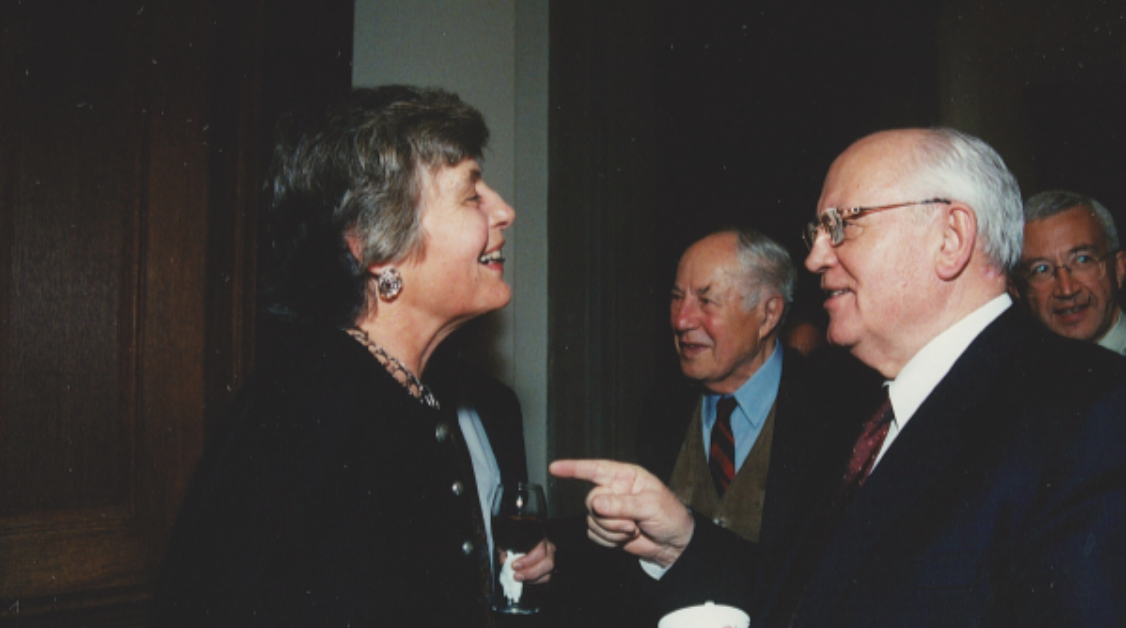
Shulman (left), Marshall Shulman (middle), Mikhail Gorbachev (right) during Gorbachev’s visit to Columbia in March 2002
Throughout her career, Shulman continued to report on the everyday experiences of Soviet citizens and, later, citizens of the Russian Federation. She served as a senior staff associate at Columbia University’s School of International Affairs in the 1980s and chaired the University Seminar on Communism, helping educate students and scholars about the Soviet world. She also founded and led programs for Soviet émigré scholars, helping accomplished academics and professionals establish new lives and careers in the United States. In the early 1980s, she co-founded Women’s Dialogue U.S.-U.S.S.R., creating one of the most significant people-to-people exchanges between American and Soviet women.
At the end of the Soviet period, in 1989, Shulman founded and co-edited — with Katrina vanden Heuvel of The Nation — the Russian-language magazine You and We (Vy i My), which became an important resource for women creating new civic organizations throughout Russia and the former Soviet republics. She continued running the magazine in partnership with Russian feminist journalists until the early aughts while also helping to nurture the growth of post-Soviet civil society, supporting emerging nongovernmental organizations and women’s leadership networks during the turbulent 1990s. For years, she served on the Europe and Central Asia Advisory Council of Human Rights Watch, conducting a groundbreaking investigation on violence against women in the Russian Federation.
A life member of the Council on Foreign Relations, Shulman remained actively engaged in intellectual and foreign policy circles. She also maintained a close connection to the Harriman Institute, serving for many years on its National Advisory Council, mentoring students and enriching discussions at the Institute’s various conferences and events.
We will deeply miss Shulman’s vibrant presence, her wit, her passion and dedication to area studies, and the ravenous curiosity with which she approached the world. We will also miss her commitment to young scholars and activists.
We send our deepest condolences to her friends, family and loved ones. Her memory, and her powerful legacy, will continue to live on within the fabric of our community and the world at large. The Harriman Institute will honor Colette Shulman’s life’s work with a memorial service in the fall.
Read more about Shulman in The New York Times obituary, which references our Oral History project and a reminiscence Shulman wrote for Harriman Magazine.
(Featured image: Shulman at the 2022 Harriman Institute graduation brunch)
