
Registration REQUIRED by 4pm on March 2, 2026 in order to attend this event.
Please join the East Central European Center and the Harriman Institute for a lecture by Louisa Slavkova and Nadia Shabani. Moderated by Gail Archer.
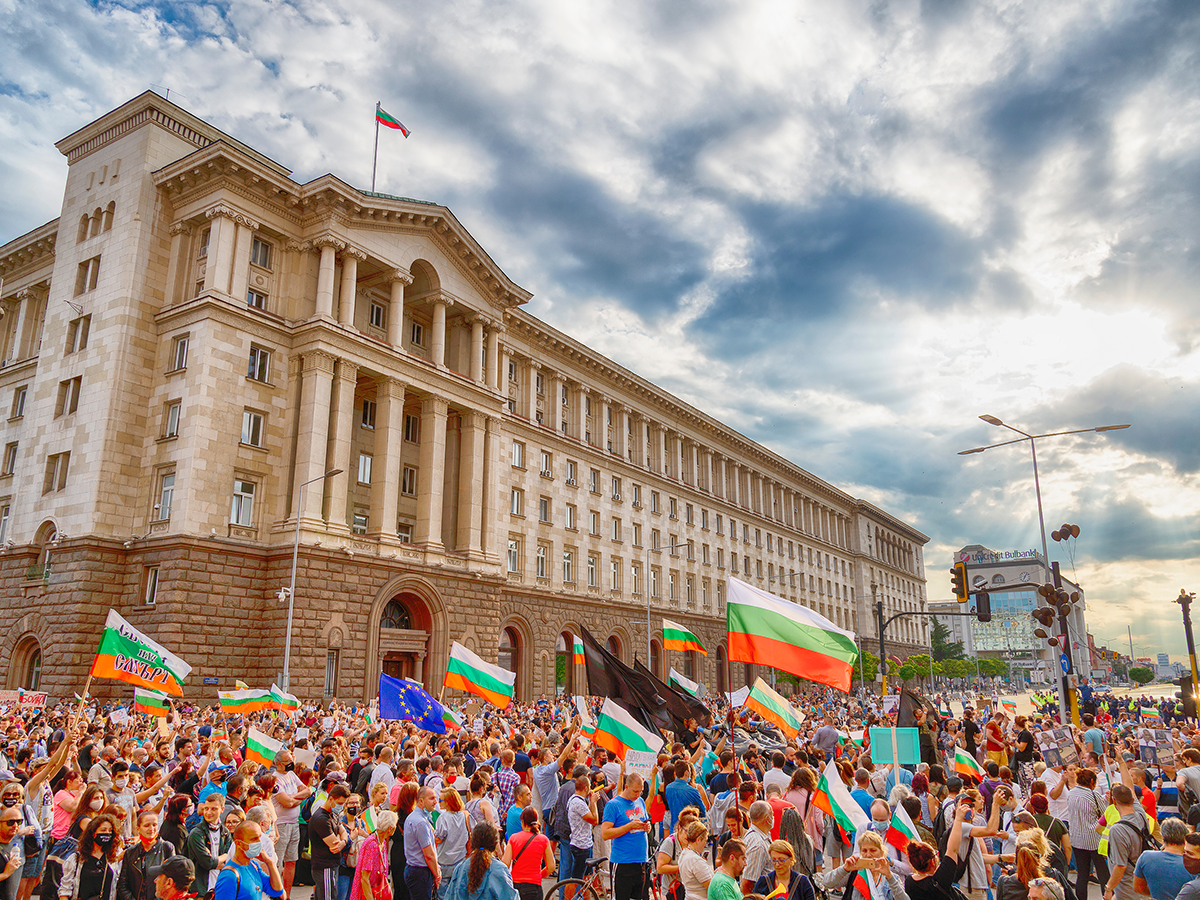
Held on Bulgaria’s National Holiday, this conversation at the Harriman Institute uses Bulgaria as a regional case study: what happens after democracy has been gradually hollowed out – and what it takes to push back. Louisa Slavkova and Nadia Shabani connect shifts in U.S. policy under President Trump’s second term with Europe’s security landscape, Russia’s war against Ukraine, and the ways domestic political instability can be exploited to weaken institutions and public trust.
From there, the discussion turns to lessons that travel across Central and Eastern Europe and the Balkans: how attacks on civil society become politically useful, how hostile narratives and “foreign agent” style initiatives spread, and how Russian influence operates not only through energy and geopolitics, but also through information ecosystems and trust erosion.
Drawing on BCNL’s legal and policy expertise and Sofia Platform’s work in civic education and historical memory, the speakers focus on responses that strengthen resilience – legal defense, coalition-building, and principled partnerships (including with business) that protect independence while widening support. The session closes with a forward-looking question: how societies rebuild trust and citizens’ agency over time – through civic education and a serious reckoning with the communist past.

Nadia Shabani is the Director of the Bulgarian Center for Not-for-Profit Law where she is developing projects in legal and financial framework of CSOs, human rights protection and good governance. She helps public officials on the central and local levels, as well as lawyers, professional groups, civil society activists, parental organizations and service providers to develop policies, strategic documents, drafting legislation changes and impact assessments affecting civic space. BCNL pushed more than 24 legislative acts and policies to enable civil society organizations to operate in Bulgaria, raise donations, communicate their achievements and participate more easily in the decision-making process. The author of a wide range of publications and research studies, Nadia holds a MA in International Law and International Organizations from the Sofia University St. Kliment Ohridski. In 2014, Nadia was awarded together with 24 other activists in child rights by the President of Republic of Bulgaria with the Honored Mark for exclusive contribution and merits for protecting children rights in Bulgaria (25th anniversary from the adoption of the Convention on Children rights).
 Louisa Slavkova is a political scientist, author, and civic education leader working at the intersection of democratic resilience and historical memory, with a particular focus on how societies reckon with the legacy of communism in Bulgaria and Eastern Europe. She has held roles including Visiting Fellow at Columbia University, Program Manager at the European Council on Foreign Relations, and adviser to Bulgaria’s former foreign minister Nickolay Mladenov, and to Bulgaria’s climate minister, Julian Popov. In 2013, Louisa founded the Sofia Platform Foundation, which develops civic education programs and public history initiatives dedicated to the communist period – through educator training, youth formats, and memory projects that connect lived experience and archival work with today’s democratic challenges. She is a co-author of two civic education textbooks in Bulgaria and has authored and edited several books and publications on foreign policy and democracy development. In 2021, Louisa co-founded THE CIVICS Innovation Hub and serves as one of its three managing partners, overseeing operations in Sofia. Louisa is a Member of the Council of ECFR.
Please email disability@columbia.edu to request disability accommodations. Advance notice is necessary to arrange for some accessibility needs.
