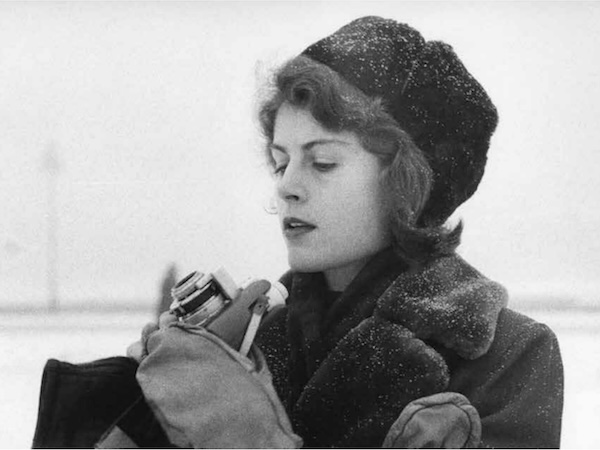
Colette was a woman of remarkable presence, spirit, and grace.
I learned much from Colette over the many years we worked together on the feminist newsletter “You and We” (Vy i My). I admired her fearless and trailblazing life as a reporter in post-Stalin Russia, and her deeply humane understanding of that country’s complex past. She was a true believer in the importance of dialogue and people-to-people diplomacy. Colette herself was a bridge builder—in 1960, she launched a weekly segment on PBS titled “Soviet Press This Week,” which explained Soviet politics, society, literature, and foreign policy to American viewers. In the early 1980s, she co-founded Women’s Dialogue US-USSR; and, as a member of Human Rights Watch’s advisory council on Europe and Central Asia, she assisted in conducting a pathbreaking investigation on violence against women in Russia.
Even after her beloved Marshall passed, she kept alive their nearly fifty-year partnership grounded in a mutual dedication to advancing US-Russian/Soviet dialogue. She served for many years on the Harriman National Advisory Council and remained engaged and curious to the very end. Refreshingly, while Colette had quite trenchant political observations, she had little use for ideology or dogma. Her preference was always for pragmatic problem solving and the constructive exchange of practical information. Her dedication to fostering young scholars and civil society, to nurturing peace and understanding—and doing it with historical awareness and compassion—was remarkable. I am one of many who are indebted to Colette for her kindness, mentoring, and generosity.
Katrina vanden Heuvel
Editor and Publisher, The Nation