

Registration REQUIRED by 4pm on October 26, 2026 in order to attend this event.
Please join the Program on U.S.-Russia Relations for a conversation with Tanya Kotelnykova and Nina Shahverdyan. Moderated by Elise Giuliano.
How do you rebuild your life when war has shattered your sense of home and security? What does justice mean when you have experienced its absence firsthand?
For Tanya Kotelnykova from Ukraine and Nina Shahverdyan from Nagorno-Karabakh, these questions are deeply personal. Tanya was forced to leave her home in Donbas when Russia occupied it in 2014. Eight years later, she faced war once again in Kyiv as Russian forces encircled the city during the full-scale invasion. Nina was an English teacher in Nagorno-Karabakh when Azerbaijan’s months-long blockade left her and her students facing hunger and severe shortages of basic necessities. She then endured a military attack, which forced them to flee their homes. Their paths later brought them to Columbia University as displaced students, where Tanya studied human rights, and Nina focused on crisis education in conflict zones.
Today, both lead advocacy organizations and initiatives to support young people affected by war through education and community building. Join them for a conversation about how experiences that shattered their belief in justice also deepened their determination to pursue it, and how sharing their stories has become a form of resistance and a way to create possibilities for others.
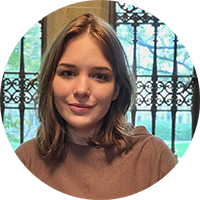 Tetiana (Tanya) Kotelnykova, the founder of Brave Generation, has twice fled her home because of Russia’s war against Ukraine: first in 2014, when Russian-backed forces occupied her hometown of Horlivka in Ukraine’s Donetsk region, and again in 2022 during Russia’s full-scale invasion, when she fled Kyiv, where she was completing her law degree. After receiving Columbia’s Scholarship for Displaced Students, she relocated to New York to pursue a master’s degree in Human Rights. During her first semester in 2022, she founded Brave Generation to support the educational and psychological needs of Ukrainian youth affected by the war. Since then, the project has become a registered nonprofit organization with teams working on the ground in both the United States and Ukraine. After Columbia, Kotelnykova pursued a second M.A. in European and Russian Studies at Yale University, where she also served as a Teaching Fellow. Kotelnykova has also written on Ukraine, war, and human rights for Foreign Policy, the Atlantic Council, and The Atlantic.
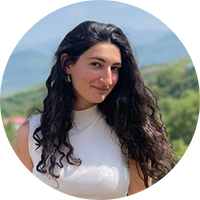 Born and raised in Nagorno-Karabakh (Artsakh), Nina Shahverdyan returned there as a teacher after earning her bachelor’s degree. She worked with war-affected students, raising money to establish libraries and sports grounds benefiting around 300 children. In 2022, her village was occupied, followed by the 2023 blockade of Artsakh and the forced displacement of Armenians from the region. As foreign journalists were barred from entering Nagorno-Karabakh, Shahverdyan became one of the few voices documenting the crisis through her blog and award-winning podcast, “Inadu,” now an archive tracing the systematic erasure of her homeland. Her interviews appeared in coverage by the BBC, Financial Times, CNN, The Washington Post, and Reuters. Nina then moved to New York to pursue her master’s degree in International Education at Columbia University. She is now involved in advocacy and activism throughout the United States and continues to support her refugee students through various cultural initiatives. Recently, she joined the Fund for Armenian Relief as a Development Manager, supporting the organization’s fundraising and storytelling efforts.
Photo by Sunguk Kim on Unsplash
