Each year, Harriman students travel abroad to conduct research, study languages, and immerse themselves in the cultures of East-Central Europe and Eurasia. These photographs, taken by students from the classes of 2025 and 2026, reflect the diversity of their destinations and their experiences.

Janat Kalmakova (MARS-REERS ’26)
Few vehicles can make the steep two-hour ascent from the rural Kyrgyz village of Ak-Suu, where Janat Kalmakova (MARS-REERS ’26) grew up, to the Altin Arashan valley. She returned there in the summer of 2025, traveling with her father in this Soviet-era Bukhanka van.


Elias Allen (MARS-REERS ’25)
In the nationalist narrative promoted by Belgrade, the Serbian minority in Kosovo faces constant persecution aimed at driving Serbs out of the country. But photos taken by Elias Allen (MARS-REERS ’25) in 2019 capture a different reality: a Serb community at work and leisure in their Kosovar home. On the left, Kosovo Serbs dance at a wedding reception in Gračanica/Graçanicë. On the right, a Kosovo Serb farmer collects bales of wheat at sunset.

Maxim Visnovsky (SIPA ’26)
In the summer of 2025, Maxim Visnovsky (SIPA ’26) boarded a plane from the Kyrgyz capital of Bishkek to the small town of Kerben, but the pilot turned back midflight due to weather warnings. Because the next Kerben flight would not take place for another three days, Visnovsky hired a local taxi instead. The ten-hour ride through the mountains cost him about $10 and took him past the beautiful yurt homes of rural Kyrgyzstan

Emma Larson (MARS-REERS ’25)
The 17th century Tilya-Kori Madrasa is one of the architectural wonders in Samarkand’s Registan Square. In 2024, Emma Larson (MARS-REERS ’25) photographed one of the many intricate mosaics that cover the madrasa, inside and out.

Boyang Liu (MARS-REERS ’25)
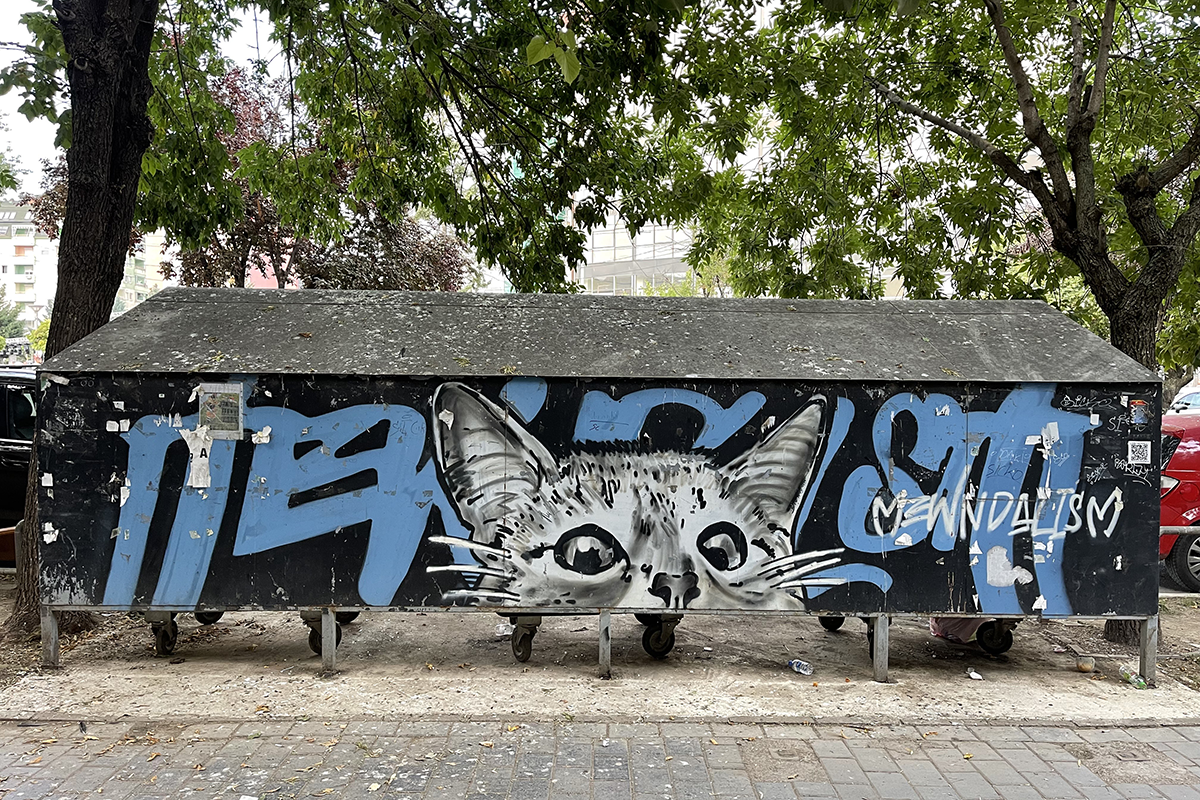
Mitrovica, in northern Kosovo, is a city divided ethnically into Serbian and Albanian neighborhoods; UN peacekeeping forces patrol the pedestrian bridge that connects the two. Graffiti abounds, most of it with references to the ethnic divide and the war that led to the city’s division. But in southern Mitrovica, the city’s Albanian stronghold, Boyang Liu (MARS-REERS ’25) found a rare example of nonpolitical street art: an arresting mural of a cat’s startled face, peering at passersby.
Alena Struzh (MARS-REERS ’25)
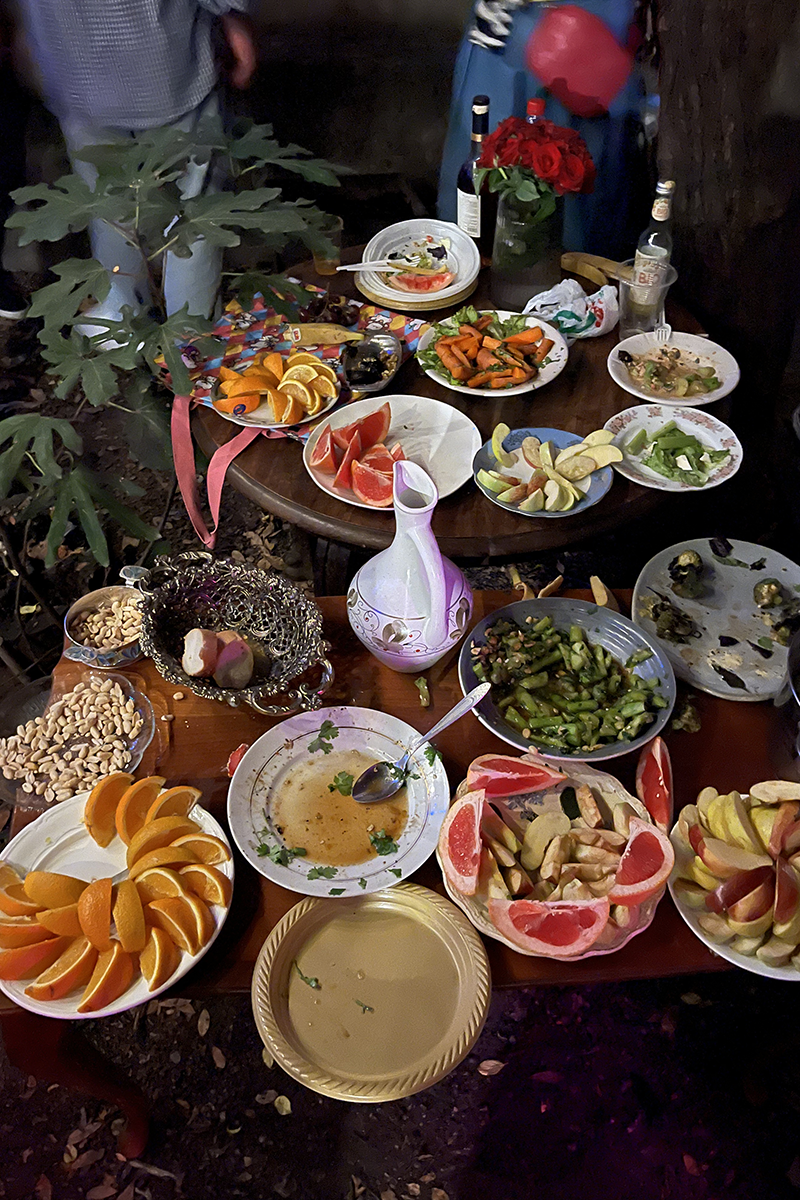
Alena Struzh (MARS-REERS ’25) captured some of the culinary contributions at a backyard party in Tbilisi in the summer of 2024. Migrants, most of whom fled Russia after its 2022 full-scale invasion of Ukraine, had gathered to celebrate the birthday of a fellow émigré. Since Russian arrivals often get a chilly reception in Georgia, the newcomers have formed a tight-knit émigré bubble for support—and for socializing.


Nick Dore (MARS-REERS ’26)
More than three years after Russia’s full-scale invasion, Nick Dore (MARS-REERS ’26) traveled around Ukraine’s contested Donetsk oblast. On the left, a priest from the Sviatohirsk Lavra Monastery showed Dore an archaeological site outside the small village of Sydorove. On the right, Dore visited the town of Bohorodychne, where a local church had been shot up and burned by Russian troops. The lone icon that survived intact, save for a single bullet hole, was quickly embraced by local residents as a metaphor for Ukrainian resilience.◆