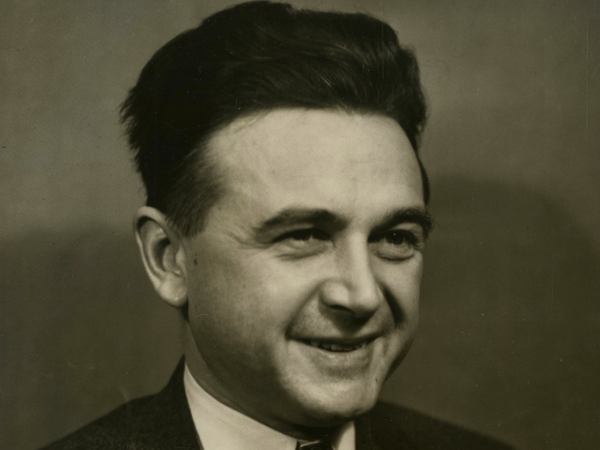
– Adapted from Elizabeth Kridl Valkenier’s tribute to Mosely, part of Harriman’s 60th Anniversary
Philip Edward Mosely, the second director of the Russian Institute, was recognized as a pre-eminent Sovietologist during and after World War II. But Mosely was ever so much more than this term implies—that is, someone adept at deciphering the latest twists and turns in the Kremlin’s secretive behavior. By training, knowledge and personal disposition he was the very personification of the area studies principle: he was an area specialist in the best and broadest sense of the term. His interests and expertise went beyond current day politics. Not only a facile linguist—his Russian was fluent and he had good working knowledge of several other languages in the area—he was also deeply interested in and well informed about the history, culture and literature of Russia, East Central Europe and the Balkans. He considered this knowledge indispensable to a true understanding of what motivated the leaders and citizens in the region.
Mosely was among the few American graduate students who spent some two years in Moscow, 1930 – 32, during one of the worst times in Soviet history—the rise of Stalinist terror and the great famine. The situation did not daunt the young scholar and Mosely already then displayed the fortitude and integrity that later gained him universal respect among diplomats and scholars in the U.S. and the USSR alike. When refused permission to take his research material home, Mosely wrote a personal request to Stalin, delivered it to the Kremlin, and received the dictator’s approval the next day.
In 1946, he became a co-founder of the Russian Institute at Columbia. Its program at the time fully reflected Mosely’s broad and rigorous approach. For Mosely teaching was a sacred calling and he held the autonomy of the university in high regard. Accordingly, he could and did decline President Johnson’s invitation to a White House luncheon because its timing conflicted with teaching a seminar. And he defended academic integrity during the pressures of the Cold War and the McCarthy hearings and did not encourage students to cooperate with the CIA.
Mosely’s own publications are not as numerous as he had wished and planned. But his endeavors in the field live on in ever so many other ways: the establishment of broadly based Soviet area studies programs; expansion of support from foundations for the field; sponsorship of publications by others; and most importantly, the work of the numerous students he advised and inspired. His creative contribution to the area studies concept and practice far transcends the merely tangible pages and books.