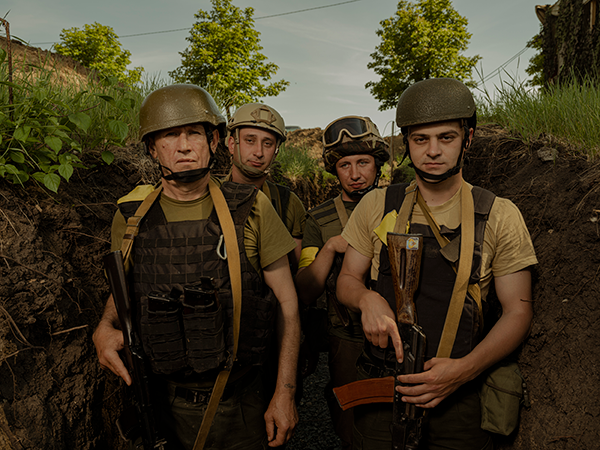
The Harriman Institute Presents Scorched Earth, Broken Lives by Sasha Maslov About the Exhibit War doesn't knock on your door asking if it can come in. It doesn’t warn you what will happen to your life, your family, your community, your town, or your country. It won't tell you what your future will look like. […]
The Kyiv Independent is a leading English-language media source based in Ukraine. Olga Rudenko (Chief Editor, Kyiv Independent) and Daryna Shevchenko (CEO, Kyiv Independent) will talk about the Kyiv Independent’s work in Ukraine and about the challenges of reporting in a country that is at war. Lili Bivings (Contributing Editor, Kyiv Independent) will then lead a discussion with the two presenters which will be flowed by a Q & A with the audience moderated by Mark Andryczyk (Harriman Institute). This event is cosponsored by Razom for Ukraine.
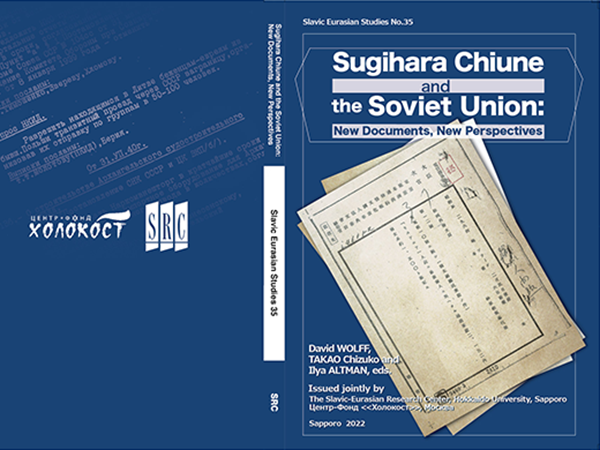
Please join the Harriman Institute at Columbia University and the Slavic-Eurasian Research Center at Hokkaido University, Japan, for a discussion with David Wolff, coeditor of "Sugihara Chiune and the Soviet Union: New Documents, New Perspectives". Moderated by Valentina Izmirlieva, Director of the Harriman Institute.
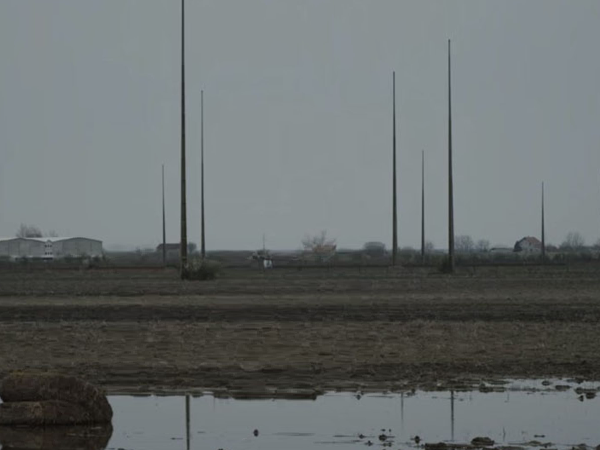
Please join the Njegoš Endowment for Serbian Language and Culture and the East Central European Center at the Harriman Institute for lecture Landscape Cinema: Image Politics After Yugoslavia by Pavle Levi (Stanford University). Moderated by Aleksandar Bošković, Lecturer in Bosnian, Croatian and Serbian.
Please join the Harriman Institute at Columbia University for a discussion with Maria Pevchikh, head of the investigation department at the Anti-Corruption Foundation. Moderated by Elise Giuliano, Senior Lecturer in Political Science.
Please join the World Leaders Forum, the Center for Global Economic Governance, and the Harriman Institute for a conversation with Sviatlana Tsikhanouskaya, leader of Belarusian democratic forces. Moderated by Alexander Cooley, Claire Tow Professor of Political Science at Barnard College; 15th Director of the Harriman Institute.
Please join the World Leaders Forum, the Center for Global Economic Governance, and the Harriman Institute for a conversation with Prime Minister Dimitar Kovachevski of the Government of the Republic of North Macedonia. Moderated by Alexander Cooley, Claire Tow Professor of Political Science at Barnard College; 15th Director of the Harriman Institute.
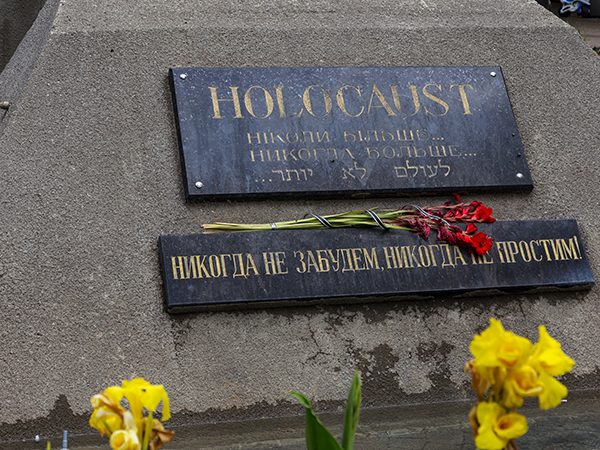
Please join the Gross Center for Holocaust and Genocide Studies at Ramapo College of New Jersey and the Harriman Institute at Columbia University for a discussion with Svitlana Teluka. Discussed by Tanya Domi, Columbia University.
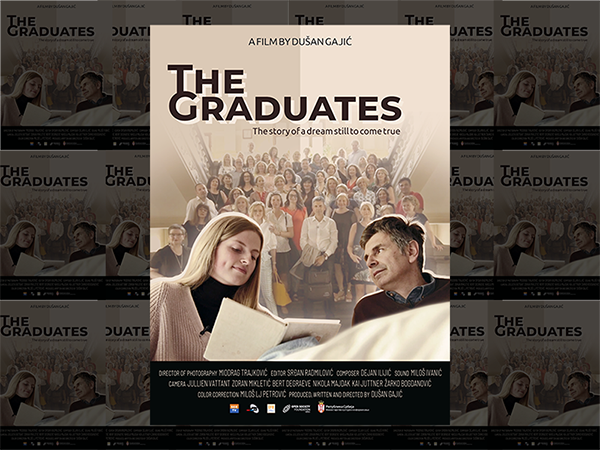
Please join the Njegoš Endowment for Serbian Language and Culture and the East Central European Center at the Harriman Institute for the US premiere of Dušan Gajić’s documentary "The Graduates" (2022) and a discussion with the director. Moderated by Aleksandar Bošković, Lecturer in Bosnian, Croatian and Serbian.
The fourth annual workshop of the Formalist Re-reading Group convened on September 23-24, 2022 to discuss Victor Shklovsky's "Bowstring". This event was organized by Mark Lipovetsky (Columbia University), Sergei Oushakine (Princeton University) and the Harriman Institute.
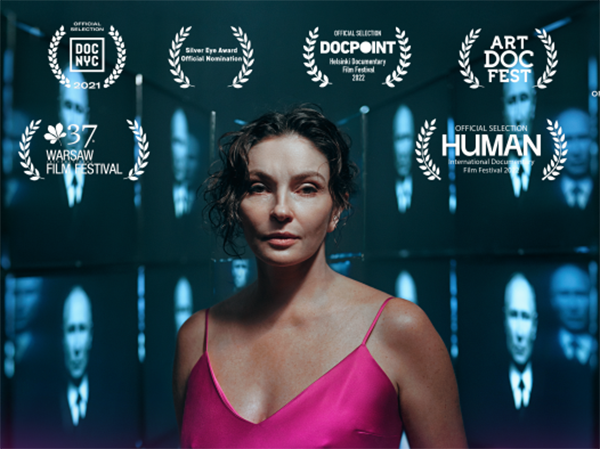
Please join us for a screening of Vera Krichevskaya's film "Tango with Putin" (2022). Following the film screening will be a discussion with the director, Vera Krichevskaya, as well as the founder of TV Rain (Dozhd'), Natalia Sindeeva. Moderated by Elise Giuliano, Senior Lecturer in Political Science; Director of the Program of U.S.-Russia Relations.
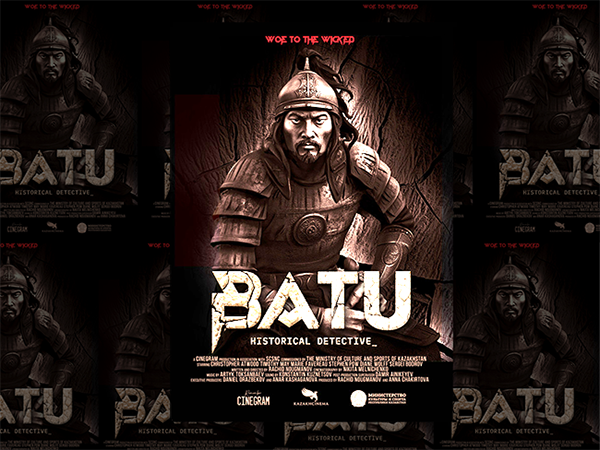
Please join the Harriman Institute for a screening of Rachid Nougmanov’s documentary film, "BATU: Historical Detective" and a discussion with Rachid Nougmanov, director, and Diane Wolff, author of "Batu, Khan of the Golden Horde: The Mongol Khans Conquer Russia". Moderated by Mark Lipovetsky, Professor of Slavic Languages. This event is part of our Contemporary Culture Series.
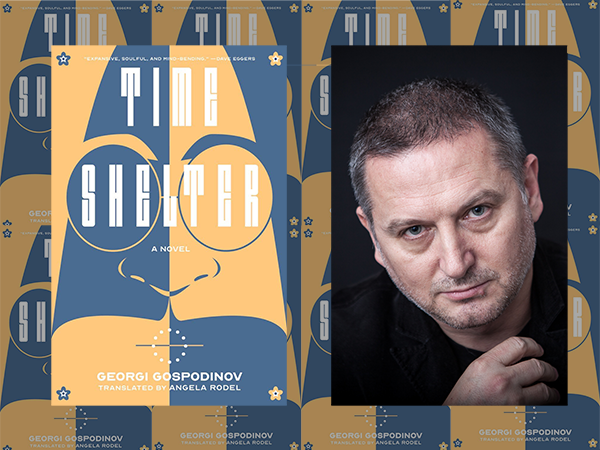
Join Georgi Gospodinov and Harriman Director Valentina Izmirlieva for a conversation about Gospodinov's novel Time Shelter, memory, loss, and the responsibilities of literature today.
This website uses cookies as well as similar tools and technologies to understand visitors' experiences. By continuing to use this website, you consent to Columbia University's usage of cookies and similar technologies, in accordance with the Columbia University Website Cookie Notice.I AGREE
Manage consent
Privacy Overview
This website uses cookies to improve your experience while you navigate through the website. Out of these, the cookies that are categorized as necessary are stored on your browser as they are essential for the working of basic functionalities of the website. We also use third-party cookies that help us analyze and understand how you use this website. These cookies will be stored in your browser only with your consent. You also have the option to opt-out of these cookies. But opting out of some of these cookies may affect your browsing experience.
Necessary cookies are absolutely essential for the website to function properly. These cookies ensure basic functionalities and security features of the website, anonymously.
Cookie
Duration
Description
cookielawinfo-checkbox-analytics
11 months
This cookie is set by GDPR Cookie Consent plugin. The cookie is used to store the user consent for the cookies in the category "Analytics".
cookielawinfo-checkbox-functional
11 months
The cookie is set by GDPR cookie consent to record the user consent for the cookies in the category "Functional".
cookielawinfo-checkbox-necessary
11 months
This cookie is set by GDPR Cookie Consent plugin. The cookies is used to store the user consent for the cookies in the category "Necessary".
cookielawinfo-checkbox-others
11 months
This cookie is set by GDPR Cookie Consent plugin. The cookie is used to store the user consent for the cookies in the category "Other.
cookielawinfo-checkbox-performance
11 months
This cookie is set by GDPR Cookie Consent plugin. The cookie is used to store the user consent for the cookies in the category "Performance".
viewed_cookie_policy
11 months
The cookie is set by the GDPR Cookie Consent plugin and is used to store whether or not user has consented to the use of cookies. It does not store any personal data.
Functional cookies help to perform certain functionalities like sharing the content of the website on social media platforms, collect feedbacks, and other third-party features.
Performance cookies are used to understand and analyze the key performance indexes of the website which helps in delivering a better user experience for the visitors.
Analytical cookies are used to understand how visitors interact with the website. These cookies help provide information on metrics the number of visitors, bounce rate, traffic source, etc.
Advertisement cookies are used to provide visitors with relevant ads and marketing campaigns. These cookies track visitors across websites and collect information to provide customized ads.